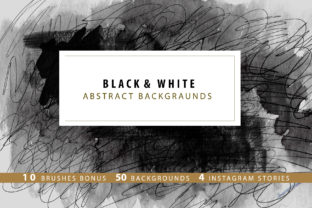
Elevating Your Instagram Feed with Authentic Black and White Abstract Backgrounds
In the crowded visual landscape of social media, standing out often comes down to the quality and uniqueness of your backdrop. Many creators turn to Black White Backgrounds Instagram collections to ground their content, seeking that high-contrast aesthetic that screams modern sophistication. However, there is a significant difference between slapping a generic monochrome filter on a photo and utilizing authentic, hand-painted abstract assets. When you integrate painterly shapes in forest black, gold blush, and white into your strategy, you are not just filling space; you are establishing a brand identity that feels curated and expensive.
The allure of these backgrounds lies in their versatility. Whether you are designing wedding invitations, crafting holiday greeting cards, or building a cohesive brand presence online, the texture of hand-painted elements adds a human touch that digital gradients simply cannot replicate. Yet, despite the clear benefits, many users stumble when selecting and applying these resources. Understanding the nuances of what you are buying and how to implement it correctly can save you from costly redesigns and lackluster engagement.
The Trap of Generic Monochrome vs. Hand-Painted Depth
A common misunderstanding among beginners and even seasoned marketers is assuming all black and white backgrounds are created equal. It is easy to scroll past a listing and think, "It's just black and white, how different can it be?" This oversight often leads to downloading flat, lifeless images that make your foreground text or products disappear rather than pop. True artistic value comes from the interplay of tones and textures found in authentic, hand-painted abstract backgrounds.
When you choose assets featuring forest black and gold blush accents, you introduce depth. The "forest black" provides a rich, organic darkness that is softer than pure hex-code black, while the "gold blush" offers a subtle warmth that prevents the design from feeling cold or sterile. Using a standard, computer-generated black background can often result in a harsh contrast that strains the eye on mobile screens. In contrast, painterly shapes allow light to interact with the image naturally, creating a sophisticated canvas for your content.
To avoid this pitfall, always preview the texture of the background before committing. Look for variations in brushstrokes and pigment density. If the image looks too uniform or pixelated upon zooming in, it likely lacks the resolution needed for professional print projects like stationary or branding materials. High-quality files should maintain their integrity whether viewed on a smartphone or printed on heavy cardstock.
Navigating File Formats and Resolution Requirements
One of the most frequent errors creators make involves ignoring technical specifications until it is too late. You might find a stunning set of Black White Backgrounds Instagram ready for download, only to realize later that the resolution is insufficient for your specific needs. For instance, a collection offering 50 square abstract backgrounds in JPG format at 72dpi and 4000 x 4000 pixels is ideal for web use and high-resolution social posts. However, if you intend to use these for large-scale printing, such as event backdrops or oversized posters, you must understand the limitations of 72dpi versus 300dpi requirements.
For digital-first projects like Instagram stories or website headers, the 4000 x 4000 px dimension is more than adequate, ensuring crisp display on retina screens. The inclusion of RGB color mode is standard for these digital applications. Problems arise when users attempt to take these web-optimized JPGs and force them into complex print workflows without adjusting expectations. While 4000 pixels is generous, the 72dpi setting is specifically tailored for screen viewing. If your project requires professional offset printing, you may need to work with a designer who can properly upscale or vectorize elements, or seek out specific print-ready files if available.
Furthermore, do not overlook the value of editable formats. A robust package often includes Instagram stories in AI, PNG, and PSD formats. These layered files are crucial for efficiency. Instead of struggling to overlay text on a flattened JPG, having a PSD allows you to adjust blending modes, mask out specific painterly shapes, or tweak the gold blush opacity to match your brand guidelines perfectly. Skipping over packages that offer these editable layers limits your creative flexibility and increases the time spent on each post.
Maximizing Value with Bonuses and Understanding Exclusions
Smart buyers look beyond the main attraction to evaluate the entire ecosystem of the purchase. Many premium background packs include bonuses that significantly enhance their utility, such as the 10 Photoshop brushes often bundled with abstract collections. These brushes allow you to extend the artwork, create custom transitions, or add unique flourishes to your designs that no one else has. Ignoring these tools means missing an opportunity to truly customize the "hand-painted" feel to your specific voice.
However, clarity regarding what is not included is equally important to prevent frustration. A frequent point of confusion occurs when purchasers assume that mockups showing the backgrounds in context are part of the download. For example, if a product preview displays the abstract art on a bar of soap or a folded wedding invitation, it is vital to note that stationary and soap mock-ups are typically not included with the purchase. These are usually demonstration tools used by the seller to showcase potential applications.
Failing to read these details can lead to a disjointed workflow where you have the beautiful background but no way to visualize it in a realistic setting immediately. To correct this, plan your workflow accordingly. If you need to present a client with a mockup of a wedding invitation using these forest black and gold blush designs, ensure you have your own mockup templates ready or source them separately. This proactive approach ensures you can deliver professional presentations without delay.
Strategic Application for Branding and Seasonal Campaigns
Adding an artistic, modern twist to holiday design needs is where these abstract backgrounds truly shine. During saturated seasons like Christmas or Valentine's Day, feeds become cluttered with cliché red and green or pink and red motifs. Utilizing a sophisticated palette of forest black, white, and gold blush cuts through the noise. It signals elegance and exclusivity, appealing to an audience aged 20–50 that values authenticity over trend-chasing.
When applying these backgrounds, consider the hierarchy of your design. Because the painterly shapes are authentic and textured, they demand respect. Do not overcrowd the image with excessive text or competing graphics. Let the abstract forms breathe. Use the white spaces for legibility and the darker forest areas to anchor heavier elements. For entrepreneurs and small business owners, consistency is key. Using the same set of 50 backgrounds across your grid creates a recognizable visual language that followers begin to associate with your brand reliability.
Ultimately, the decision to invest in high-quality abstract assets should be driven by a desire for longevity and quality. By avoiding the traps of low-resolution generics, understanding file limitations, and leveraging editable layers and bonuses, you transform a simple background purchase into a powerful branding tool. Whether for a freelancer polishing a portfolio or a marketer launching a new campaign, the right foundation makes all the difference in how your message is received.